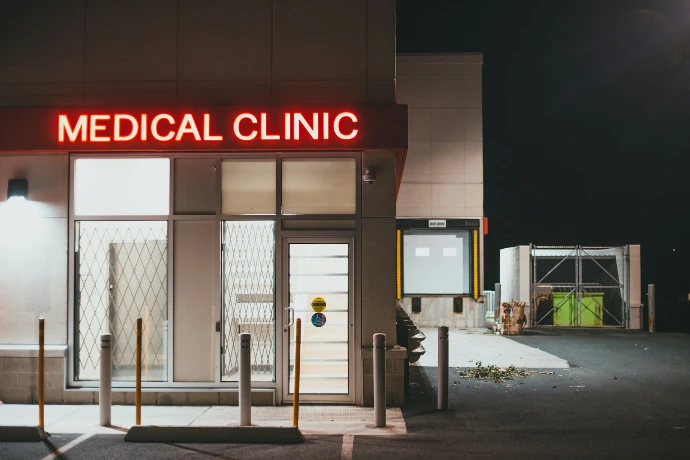
Rebuilding Care in a Modern Healthcare Clinic
When Growth Exposes Hidden Risks
Like many outpatient clinics in the Philippines, our client built their practice on dedication, experience, and trust. Daily operations followed a familiar rhythm: patients filled out paper forms upon arrival, front-desk staff encoded basic details, charts were passed between nurses, physicians, laboratories, and billing.
For years, this system worked—until patient volume increased.
As more patients were attended simultaneously, the clinic began to feel the strain of paper-based care. Charts moved physically from desk to desk. Lab results were stapled or handwritten. Prescriptions were added to the same bundle of paper. Billing depended on reconstructing the patient’s journey from documents that had passed through multiple hands.
Clinic leadership realized that the issue was not staff performance—it was workflow design. They needed a way to protect care delivery as the clinic continued to grow.
The Reality on the Ground: Paper as a Bottleneck
A closer review of daily operations revealed several compounding risks:
Daily Workflow Snapshot:
- Fragmented Patient Flow → Registration, vitals, consultation, lab work, prescriptions, and billing all depended on the same physical documents being in the right place at the right time.
- Parallel Care, Sequential Paper → Nurses and physicians often attended multiple patients simultaneously, but paper records could only be in one place at a time—creating delays and confusion.
- High Risk of Loss and Error → Missing pages, misfiled lab results, or charts accidentally taken by another department disrupted care and required time-consuming reconstruction.
- Physical Archiving Burden → Patient records were stored on-site or in adjacent buildings, similar to a library system. Retrieval was slow, storage space was shrinking, and records were vulnerable to damage from floods, fire, or deterioration.
- Limited Visibility for Management → Clinic owners lacked real-time insight into daily operations, revenue flow, and service demand, making planning and expansion difficult.
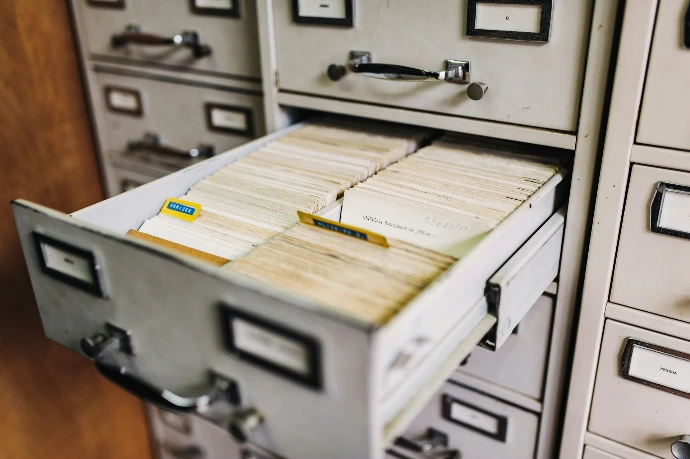
The Clinic Was Managing Paper, Not Care
Our role was not simply to digitize forms, but to rethink how care should flow.
The clinic was not struggling because of patient volume—it was struggling because information moved slower than care.
Our objectives were to:
- → Replace document-driven workflows with patient-centered digital records.
- → Enable staff to work in parallel without dependency on physical files.
- → Preserve compliance with Philippine healthcare standards.
- → Prepare the clinic for future growth and multi-branch expansion.
- → Improve patient experience without increasing staff workload.
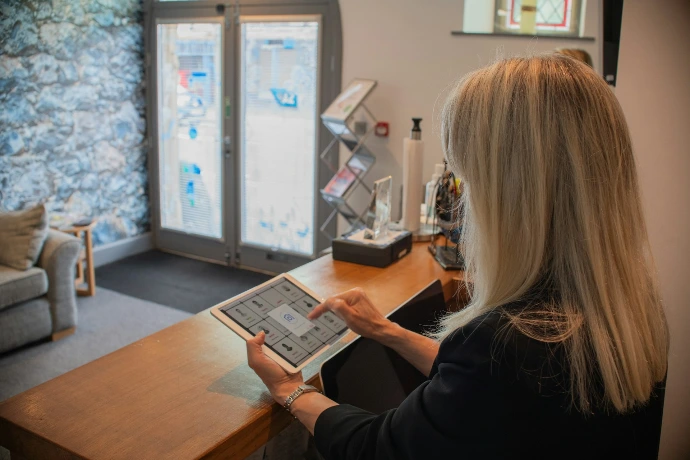
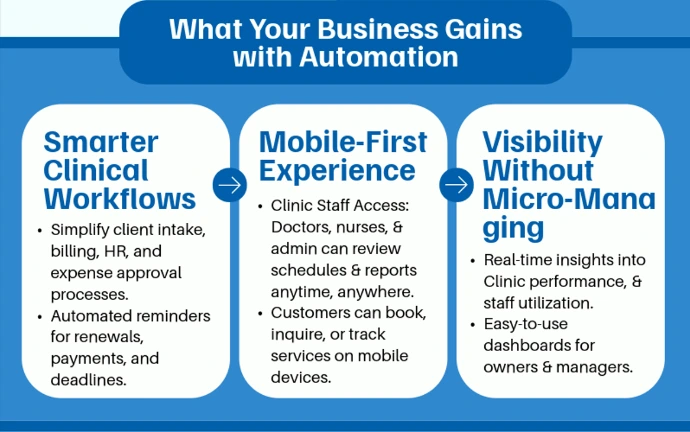
Our unified digital platform—delivering seamless care and efficient operations.
A Unified Digital Care Platform
We implemented a modular, integrated healthcare solution designed around how clinics actually operate in the Philippines.
Core Modules & Their Functions:
Digital Patient Access & Online Presence
Care no longer begins at the front desk—it begins before the patient arrives.
Patients can now:
View clinic services and schedules online
Book appointments based on real-time availability
Receive automated confirmations and reminders
Ask common questions through digital channels
Access a secure portal for records, results, and billing
Impact:
Reduced walk-in congestion, fewer phone inquiries, improved appointment adherence, and smoother daily operations for front-desk staff.
Smart Registration & Intake
Patient information is captured once and reused throughout the visit.
- Digital intake replaces repetitive paper forms.
- Returning patients are instantly recognized.
- Information flows automatically to clinical staff
Impact:
Faster registration, fewer encoding errors, and improved data accuracy.

Centralized Electronic Patient Records
Each patient now has a single, secure digital profile that includes:
Personal and medical history
Consultation notes
Laboratory requests and results
Prescriptions
Billing and payment records
Impact:
No lost charts. No missing pages. Complete patient context at every step of care.
Seamless Clinical Collaboration
Nurses, physicians, and laboratory staff work on the same patient record in real time.
- Vitals entered by nurses are immediately visible to doctors
- Lab requests are generated directly from consultations
- Results are linked automatically to the correct patient
Impact:
Reduced duplication, fewer errors, faster decision-making, and improved coordination.
Integrated Billing & Payments
All chargeable services are captured automatically as care is delivered.
Consultations, labs, procedures, and medicines are recorded in real time
Billing no longer depends on reconstructing paper trails
Patients can view clear, itemized charges
Impact:
Faster checkout, fewer disputes, improved cash flow, and greater transparency.
Secure Digital Archiving & Compliance Readiness
Physical storage is replaced with secure, searchable digital archives.
Records are protected against loss, floods, and fire
Retrieval takes seconds instead of hours
Designed with local regulatory compliance in mind
Impact:
Lower storage costs, reclaimed physical space, and reduced operational risk.

Measurable Business Outcomes
Before, daily operations depended on physical movement—papers, folders, cabinets, storage rooms.
Today, operations depend on clarity, visibility, and flow.
Operational Gains
Patient waiting time reduced by approximately 30%
Daily patient capacity increased by 20–25%
Administrative workload significantly reduced
Clinical Benefits
Improved continuity of care
Better clinical decisions through complete records
Fewer documentation-related errors
Management Visibility
Real-time operational and financial insights
Improved forecasting and planning
Stronger foundation for expansion